
Most restaurant operators know that online reviews matter. Fewer realize just how directly they translate to covers, orders, and revenue — and how dramatically that impact compounds across a multi-location portfolio. This post breaks down the real numbers behind star ratings and revenue, explains how ratings affect visibility on Google and delivery platforms, and makes the case for treating guest feedback management as a revenue function, not a reputation afterthought.
There's a framing issue that holds a lot of restaurant operators back.
When most operators think about online reviews, they think about reputation. They think about responding to angry guests, managing one-star ratings, and protecting the brand's public image. It feels like a communications function — something marketing handles when there's time.
That framing is expensive.
The data is unambiguous: your star rating is one of the most direct drivers of revenue in your business. Not indirectly, not eventually — right now, every single day, it is determining how many guests choose your restaurant over the competitor two blocks away.
If you're running a multi-location restaurant group and you don't have a system for actively managing guest feedback, you are leaving a measurable, recurring amount of money on the table at every location in your portfolio.
Here's why.
Let's start with the number that changes how most operators think about this.
A 1-star increase in rating can drive 5–9% more revenue.
That's not a marketing claim. That's been documented across multiple large-scale studies of restaurant ratings and sales data, and it holds across different restaurant categories and markets.
Run the numbers for your own portfolio:
That's not theoretical upside. That's real revenue that's currently going to competitors with higher ratings — and it's being lost not because your food is worse, but because your feedback management is less consistent.
The gap between a 3.9-star location and a 4.4-star location in your portfolio almost certainly isn't a kitchen quality gap. It's a systems gap. It's the difference between a location that has a structured process for responding to feedback, resolving complaints, and fixing recurring issues — and one that's handling it manually, inconsistently, and reactively.
There's a specific number worth knowing: 4.0 stars.
53% of diners won't visit a restaurant with less than a 4-star rating. Half your potential market, gone — not because they had a bad experience, but because someone else did and you didn't manage it.
For a location sitting at 3.8 or 3.9, this isn't a marginal difference. It's a hard filter that more than half of potential guests are applying before they ever look at your menu, your photos, or your location. You've lost them before you had a chance to compete.
And the guests who are making this decision aren't deep-reading your review history. They're scanning the star count, seeing a sub-4.0, and moving on in under 10 seconds. You can have 300 four-star reviews and a handful of one-stars that dragged your average below the threshold — and that's the number those guests are using to eliminate you from consideration.
This is why response rates matter so much. A well-handled response to a one-star review doesn't just show the original reviewer that you care — it demonstrates to every future reader that your team is attentive and accountable. That signal influences the mental math every potential guest runs when they look at your listing.
Here's the part most operators underestimate: your star rating isn't just affecting whether guests choose you after they find you. It's affecting whether they find you at all.
Google's local ranking algorithm weighs review signals heavily — not just overall rating, but review volume, recency, and response rate. A location that consistently receives reviews, responds to them promptly, and maintains a 4.3+ rating will rank higher in local search results and appear more prominently on Google Maps than an equally well-located competitor that's managing feedback inconsistently.
For a restaurant group with 20 locations, the cumulative effect of 20 locations with strong, actively-managed Google profiles is a significant SEO advantage — one that compounds over time as review volume grows.
On UberEats, DoorDash, and similar platforms, your restaurant's rating directly affects your placement in search results and browse categories. A location ranked in the top results for "burgers near me" on DoorDash is generating materially more orders than a competitor buried on page two — and the ranking algorithm is weighing your average rating.
59% of diners actively avoid restaurants with negative reviews. On delivery platforms, where guests are making quick decisions from a long list of options, this behavior is even more pronounced. Your delivery rating isn't just a satisfaction metric. It's a distribution lever.
For restaurant groups opening new locations, the early review period is critical in a way that's easy to underestimate.
A new location that dips below 4 stars in its first 60 days faces an uphill battle. Those early reviews carry disproportionate weight — they set the baseline for the location's rating, influence its initial search rankings, and shape the first impressions that persist long after the opening buzz has faded.
An opening weekend operation that hasn't yet found its rhythm, generating a cluster of 2- and 3-star reviews that go unresponded to for days, can create a rating hole that takes months to climb out of. And all of this is happening during the window when the location has maximum visibility and minimum operational polish.
Here's a number that should feel like an opportunity rather than a critique:
The average restaurant takes around 10 days to reply to a review. Guests expect a response within 24–48 hours.
That's a 10x gap between what guests expect and what most restaurants deliver. And it's almost entirely a systems problem, not a motivation problem. The managers and franchisees who aren't responding quickly aren't doing it out of indifference — they're doing it because they're busy, because they have six different platforms to monitor, and because there's no consistent workflow telling them what to do when a review comes in.
For operators who build a system for responding consistently and quickly, that gap is a competitive advantage. You are operating in a market where most of your competitors are taking 10 days to respond. If you can get to 24 hours, you look dramatically more attentive and professional to every potential guest reading those reviews.
And the compounding effect is real: restaurants that respond consistently to reviews — both positive and negative — tend to receive more reviews over time. Guests are more likely to leave feedback when they believe it will be acknowledged. More reviews generate more data, which feeds back into your ability to identify and fix operational problems.
The shift worth making is this: stop thinking about your star rating as a vanity metric that marketing tracks, and start treating it as a revenue lever that operations owns.
Because that's what it is.
Every unresponded complaint on your Google listing is actively redirecting potential customers to a competitor. Every location sitting below 4.0 is filtering out more than half its potential market before they ever see your menu. Every pattern in your guest feedback that goes unanalyzed is an operational problem that keeps generating negative reviews instead of getting fixed.
The operators who win on this understand that guest experience management — collecting feedback, responding consistently, and using the data to improve operations — is not a reputation function. It's a revenue function. And they staff it, system it, and invest in it accordingly.
The difference between a 3.9-star portfolio and a 4.4-star portfolio, at scale, is not the difference between mediocre food and great food. It's the difference between operators who have a system and operators who don't.
The numbers in this post are the why. The how — how to actually build a guest experience system that moves ratings across a multi-location portfolio — is laid out in detail in our Restaurant Guest Experience Playbook.
It covers the three-step framework the best multi-location operators use to centralize feedback, respond at scale, and turn guest data into operational improvements. Practical, specific, and built for groups running 5 to 50 locations.
Download the Restaurant Guest Experience Playbook
.png)
.png)
Scattered feedback from multiple platforms creates operational blind spots and revenue loss for multi-location restaurants, making data centralization essential for protecting online ratings and driving growth.

This playbook provides specific prompts for Claude, ChatGPT, NotebookLM, and Localyser to automate restaurant operations, from menu engineering and labor analysis to guest review management and staff training. By integrating these tools, operators can transform messy data into a streamlined "command center" that cuts costs and improves the guest experience.
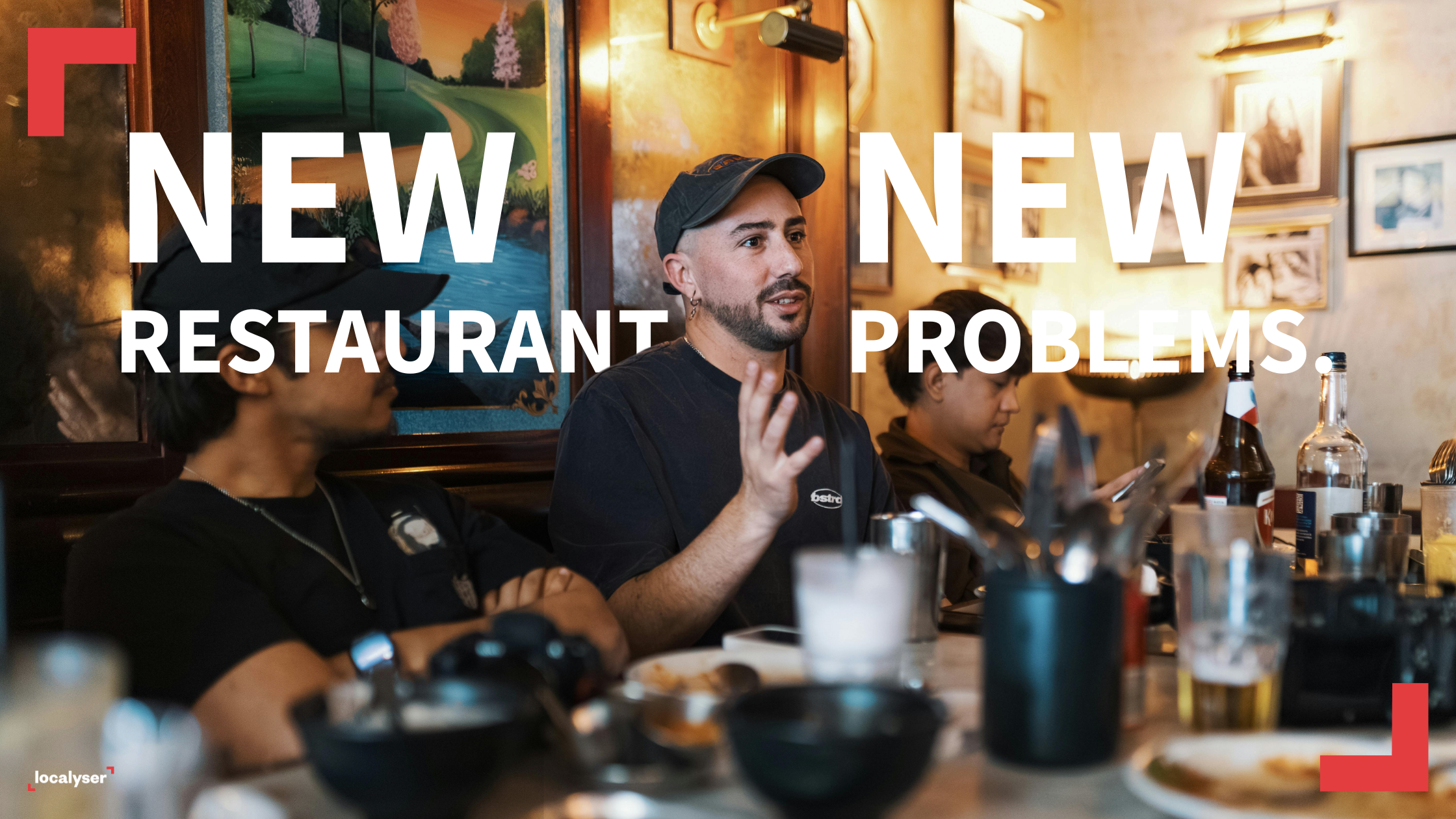
When taking over a restaurant with a poor online reputation, owners face a critical choice: repair the existing Google Business Profile or start fresh. Unless you are changing the brand name and concept entirely, rebuilding is the superior strategy. This involves claiming the listing, rebranding it as "Under New Management," performing a "deep clean" of both the physical and digital presence, and using tools like Localyser to aggressively generate new 5-star reviews to bury old negativity.


